
 Muhammad Naeem
A complete 2kW solar system in Pakistan costs roughly Rs 2.6 to 3.5 lakh installed in hybrid form with battery backup, based on the installer quotes and itemised estimates we checked on 1 October 2026. Quotes far below that range exist, but they leave out the batteries, and sometimes the installation. This page breaks down what a real 2kW system includes, what it can run, and how it sits between the 1kW and 3kW options.
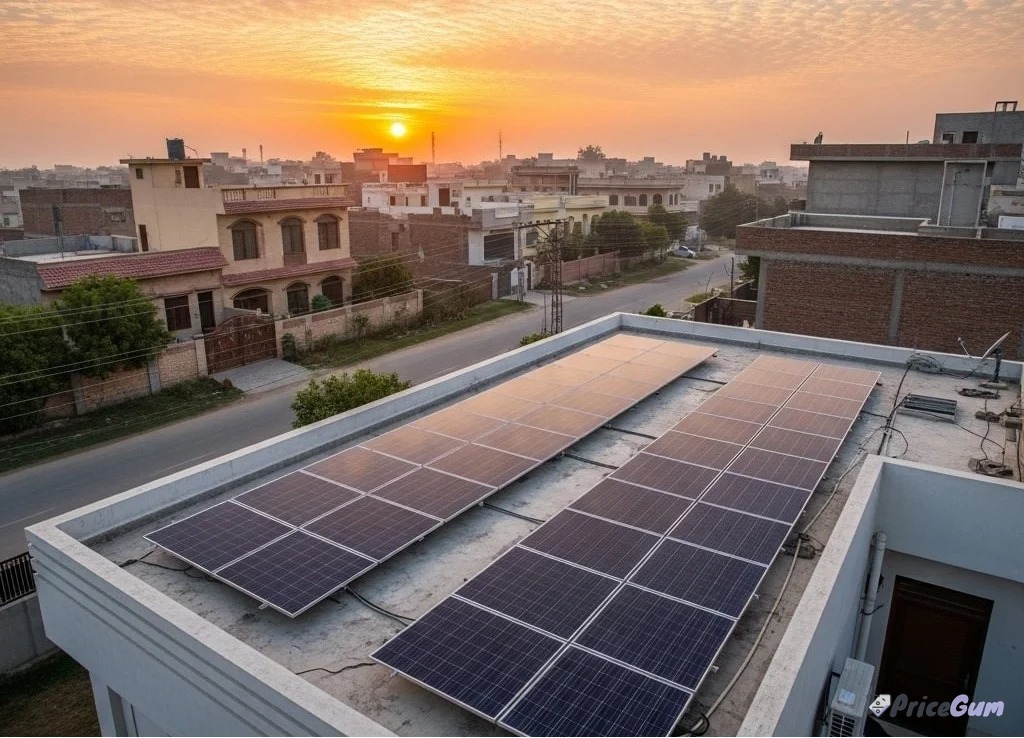
2kW solar system price breakdown
| Quote or estimate | Price (Rs) | What it includes |
| NK Solar hybrid package (Sialkot) | 346,000 | Inverex 2kW MPPT inverter, 4 x 585W panels, 2 x 115Ah batteries, structure, cable, installation |
| Solwave installed range (2026 chart) | 260,000 to 320,000 | On-grid installed range, battery extra |
| KP government 2kW scheme valuation | 255,000 to 300,000 | Government-valued complete system |
| PakSolarMarket itemised estimate | 137,640 | Panels, inverter, structure, cable and labour only; no batteries, so not a complete backup system |
The honest reading: the NK Solar quote is a complete hybrid system with two batteries and installation included, while the PakSolarMarket figure is a parts-only estimate with no batteries at all. A fair middle estimate for a hybrid 2kW with two decent batteries, structure, cabling and labour in October 2026 is Rs 2.6 to 3.2 lakh.
What is included in a 2kW solar system?
| Component | Typical 2kW specification |
| Solar panels | 4 x 585W (2,340W total) |
| Inverter | 2kW hybrid MPPT, 24V |
| Batteries | 2 x 115Ah lead-acid (lithium optional) |
| Structure and wiring | Galvanised frame, DC/AC cable, breakers |
| Daily generation | About 8 to 10 units in summer, 5 to 7 in winter |
What can a 2kW system run?
Comfortably: four to five ceiling fans, eight to ten LED lights, an LED TV, a fridge, a WiFi router and phone charging, with the battery carrying those loads for three to five hours at night. On a sunny afternoon it can also start a 1 ton inverter AC once the daytime loads are covered, but the AC should come off the battery before evening. For regular AC backup, move up to the 3kW solar system; for fans and lights only, the 1kW solar system is cheaper. Bigger homes should read the 5kW solar system breakdown before deciding.
What does a 2kW system save each month?
Eight to ten units a day in summer adds up to roughly 240 to 300 units a month of generation. For a home on a 200 to 300 unit monthly bill, that covers most of the daytime consumption and keeps the batteries cycling shallowly, which keeps them alive longer. The payback on a Rs 2.6 to 3.2 lakh hybrid system typically lands between three and four years at current tariffs, faster where load shedding forces generator or UPS fuel spending today. Treat any installer’s savings claim with suspicion unless they write down the assumed units and tariff; the panel count is real, the rest depends on your usage pattern.
On-grid or hybrid at 2kW?
An on-grid 2kW (the Solwave range in the table) is cheaper because it skips batteries, and it suits homes where load shedding is rare and the goal is a lower bill through net metering. A hybrid costs more but keeps fans, lights and the fridge running through outages, which is the main reason most Pakistani buyers choose it. At this size the hybrid premium is mostly the two batteries, so the decision is really “is backup worth the battery money”. If your area loses power for two or more hours a day, it almost always is.
Questions to ask any installer before signing
Get five answers in writing before you pay an advance. Which exact inverter and panel brands, with wattage and model numbers, not “585W panels” in general. How many batteries and what capacity, because that line decides your night backup. What the structure is made of and whether it is rated for rooftop wind load. What the bill includes for earthing, breakers and cable runs, which is where corner-cutting hides. And what the warranty covers for each part, separately for panels, inverter, batteries and labour. A seller who answers all five happily is the seller you want for a system expected to run fifteen years; NK Solar’s package above is a fair benchmark of that itemised style.
Pros and cons
- Complete hybrid installs from about Rs 2.6 lakh cover fans, lights, TV and fridge backup
- Four 585W panels fit on small rooftops where bigger systems cannot
- Runs a 1 ton inverter AC in daytime sunshine when the battery is kept for night essentials
- Battery backup is limited: two 115Ah batteries give a few hours, not a full night of heavy load
- Cheap quotes near Rs 1.4 lakh skip the batteries and installation, so they are not complete systems
- No real headroom for a second AC or a water motor on backup
Frequently asked questions
What is the 2kW solar system price in Pakistan?
A complete hybrid system with batteries and installation costs about Rs 2.6 to 3.5 lakh. Parts-only estimates near Rs 1.4 lakh exclude batteries and are not complete systems.
How many panels does a 2kW system use?
Usually four 585W panels (2,340W total) or four 550W panels, paired with a 2kW MPPT hybrid inverter.
Can a 2kW system run a 1.5 ton AC?
No. It can help run a 1 ton inverter AC in strong sunshine, but a 1.5 ton AC needs a 3kW system at minimum, ideally 5kW with battery support.
How much battery backup does a 2kW system give?
With two 115Ah lead-acid batteries, expect three to five hours for fans, lights, TV and a fridge. Lithium batteries cost more but roughly double the usable backup.
Bottom line: for a small Pakistani home, a 2kW hybrid installed at Rs 2.6 to 3.2 lakh is the sweet spot between a token UPS upgrade and an oversized system you never fully use. It covers the loads that matter through load shedding, pays for itself in roughly three to four years, and leaves the roof and wiring ready if you ever step up to 3kW. Insist on the itemised written quote, and this is a purchase most families will not regret.
Prices checked 1 October 2026 from installer quotes and itemised estimates above. Solar prices move weekly with panel rates and the dollar, so confirm a written itemised quote before paying any advance.



Add comment