
 Muhammad Naeem
Ask any solar dealer in Pakistan to quote a 580 watt system and two names come back: Longi and Jinko. Longi’s Hi-MO family, the series most buyers still ask for by the Hi-MO 6 name, trades at Rs 42.6 to Rs 46.2 per watt in July 2026 dealer reporting, which puts a 580W panel at roughly Rs 24,700 to Rs 27,300. Jinko’s Tiger Neo N-type range runs a little cheaper at Rs 40 to Rs 45 per watt, so a 580W panel sits around Rs 23,200 to Rs 26,100. Prices checked on 1 October 2026 against the reporting behind our Longi solar panel price in Pakistan and Jinko solar panel price in Pakistan guides. The saving on a 10-panel home array is roughly Rs 15,000 to Rs 20,000 in Jinko’s favour. Is Longi worth it? This comparison works through the real differences.
First, a naming warning that saves people money. Longi’s current 580W class panels in Pakistani channels are the Hi-MO 6 generation and its Hi-MO 7 and X6 successors, all quoted inside the same per-watt band; sellers do not always say which one is on the truck. Jinko’s Tiger Neo name is reused across several variants too. Always match the exact model code, wattage and glass type on the rear label before comparing quotes.
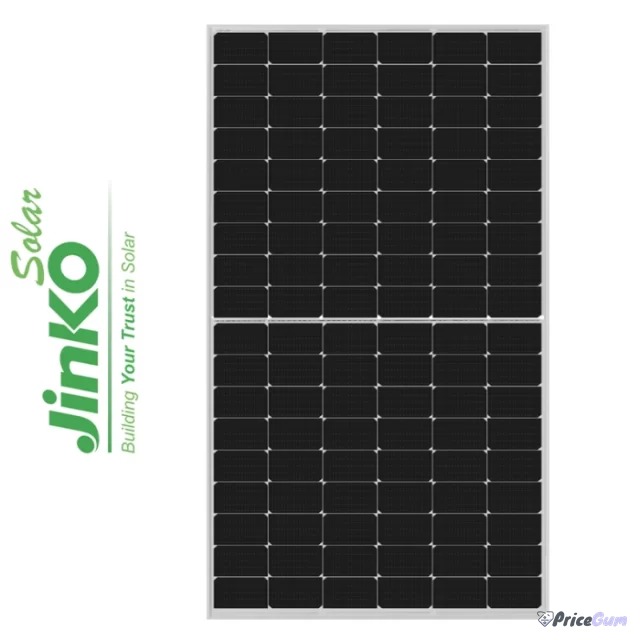
Quick verdict: Buy Jinko Tiger Neo if you want the lowest cost per watt from a tier-one maker and your roof has room for the standard 580W footprint. Buy Longi Hi-MO series if panel efficiency per square foot matters, you prefer Longi’s HPBC cell technology, or your installer offers a meaningfully better warranty file with Longi stock.
Longi Hi-MO 6 vs Jinko Tiger Neo specifications
| Specification | Longi Hi-MO 580W class | Jinko Tiger Neo 580W class |
| Cell technology | HPBC back-contact cells (Hi-MO 6 family) | N-type TOPCon with HOT 2.0 |
| Rated power | 580W mainstream size | 575W to 580W depending on variant |
| Module efficiency | About 22.5 percent in the 580W class | About 22.26 to 22.65 percent |
| Glass | Dual glass bifacial options in the X6 line | Bifacial double glass on common Tiger Neo variants |
| Dimensions | 2278 x 1134 x 30 mm class | 2278 x 1134 x 30 mm class |
| Weight | About 31.8 kg for dual glass versions | Comparable dual glass weight, check variant sheet |
| Rates checked | Rs 42.6 to 46.2 per watt (July 2026 dealer reporting, holding in the low-to-high Rs 40s) | Rs 40 to 45 per watt, GTV late September at about Rs 41.50 for 585W to 590W |
| Single 580W panel | About Rs 24,700 to Rs 27,300 | About Rs 23,200 to Rs 26,100 |
Efficiency and real output on a Pakistani roof
The efficiency gap is small but real. Longi’s HPBC back-contact design keeps shading losses lower and squeezes about 22.5 percent module efficiency out of the 580W class. Jinko’s N-type TOPCon Tiger Neo counters at roughly 22.26 to 22.65 percent with excellent low-light and high-temperature behaviour, which matters in Multan and Sukkur summers when panel temperatures soar past 65 degrees. In daily generation on the same roof, expect the two to finish within a few percent of each other. Roof orientation, dust and inverter matching will move your bill more than this cell difference ever will.
Both brands are tier-one with proper degradation curves, so a 25 to 30 year performance warranty on paper is standard at this level. The practical difference in Pakistan is paperwork, not physics: ask which seller holds the stock, who issues the warranty card, and whether the panel’s flash test report and import documents travel with the unit. More background sits in our solar panels category.
Prices in Pakistan: checking the quote properly
Longi’s July 2026 dealer band of Rs 42.6 to Rs 46.2 per watt still frames late September quotes in the low-to-high Rs 40s, depending on exact series and documents. A Lahore listing for the Longi Hi-MO X6 580W bifacial sat at Rs 25,075, inside that band. Jinko guidance puts N-type panels at Rs 40 to Rs 45 per watt, with late September reporting around Rs 41.50 per watt for 585W to 590W sizes. One documented Lahore example aside, treat any quote far below these bands as a signal to check the model code, glass type and whether the panel is older clearance stock rather than current production.
Which panel should you buy?
For most homes the Tiger Neo is the value pick: tier-one reliability, slightly better pricing per watt and output that matches Longi within a few percent in real heat. Choose Longi when roof space is tight and every watt per square foot counts, or when your installer genuinely supports the Longi warranty file better in your city. Either panel, properly installed with a matched inverter, will outlast the financing on it. That staying power is exactly why getting the paperwork right today matters more than squeezing the last rupee per watt.
What actually decides lifetime value is installation quality, not this badge fight. Matched string voltages inside the inverter’s MPPT window, proper earthing and lightning protection, and panels kept clear of dust will separate a good array from a mediocre one far more than a half percent of nameplate efficiency. Get the installer’s workmanship warranty in writing alongside the brand paperwork, whichever panel you choose.
Longi Hi-MO 580W class
- HPBC back-contact cells with about 22.5 percent module efficiency
- Strong low-shading and high-temperature behaviour
- Deep dealer stock and document support across Pakistan
- Premium resale perception with installers and buyers
Jinko Tiger Neo 580W class
- Lowest tier-one cost per watt at Rs 40 to 45
- N-type TOPCon with strong heat and low-light performance
- Bifacial double glass on common variants
- Similar real-world output to Longi on the same roof
Longi Hi-MO 580W class
- Costs more per watt, Rs 42.6 to 46.2 against Jinko’s 40 to 45
- Series naming (6, 7, X6) confuses first-time buyers
- A 10-panel array costs roughly Rs 15,000 to 20,000 more
- Cheaper quotes may be older series, check the rear label
Jinko Tiger Neo 580W class
- Efficiency slightly behind at heavy load in the same footprint
- Tiger Neo name covers multiple variants, verify model code
- Warranty handling depends heavily on the local seller
- Price gap narrows when Longi stock is on promotion
Frequently asked questions
Which panel generates more units per day, Longi or Jinko?
On the same roof and inverter, the difference is a few percent at most. Longi’s HPBC cells shade slightly better, Jinko’s N-type runs very well in heat. Installation quality, dust and orientation matter more than the badge.
Why are Longi panels more expensive per watt?
Brand positioning and its HPBC cell line. The July 2026 dealer band put Longi at Rs 42.6 to 46.2 per watt against Jinko’s Rs 40 to 45, a gap of roughly Rs 15,000 to Rs 20,000 across a 10-panel home system.
How do I avoid a fake or old-stock panel?
Check the rear label model code and wattage, demand the flash test report and import documents, buy from a dealer who issues a warranty card in your name, and be suspicious of quotes far below the per-watt bands above.
Does bifacial matter for a home rooftop?
Only slightly. Bifacial gains need reflected light from below, which a flush rooftop mount barely provides. Buy bifacial because the price is right, not because of the extra rated watts.


Add comment