
 Muhammad Naeem
RAM and SSD prices in Pakistan are rising again, and the latest news from the world’s biggest memory makers suggests the pressure is not easing soon. On October 28, SK Hynix, one of only three companies that make nearly all of the world’s DRAM memory, said demand will keep running ahead of supply through 2030. That statement landed in the same week that a flagship SSD in Lahore jumped 43 percent in a single price update. For buyers in Pakistan, who import almost all PC hardware, the message is plain: memory is getting more expensive, and waiting for a quick fall looks like a gamble.
This post pulls together what actually changed this week, what the forecasts say for the last quarter of 2026, and what it means for a buyer who needs RAM or an SSD now. All global figures below are contract prices or company results, not shop prices. Pakistan figures are dated retailer listings seen on October 29, not official brand prices, and they can move fast.
What happened this week: a record quarter and a warning through 2030
SK Hynix reported its third quarter 2026 results on October 28. Revenue reached 104.6 trillion won, up 328 percent from a year earlier, and operating profit hit 83.3 trillion won, up 632 percent, for an operating margin of 80 percent. The average selling price of DRAM rose by a high 20s percentage from the previous quarter, while NAND flash prices rose by a mid 20s percentage. Those numbers were reported by Morningstar, TweakTown and the Motley Fool from the company’s results.
The warning mattered more than the record. SK Hynix said the structure in which demand exceeds supply will persist through 2030, even as it expands production. Chief Financial Officer Kim Woo-hyun pointed to two reasons: leading edge chip processes are technically hard, and new factories take years to reach meaningful output. The company also said long term deals already cover more than half of its 2027 and 2028 production, which leaves less stock for the open market. In plain terms, the biggest memory makers have already sold much of their near future output to large cloud and AI buyers, before smaller buyers and shops get a look in.
Samsung told a similar story earlier in October. Its preliminary guidance on October 8 put third quarter operating profit at about 107.4 trillion won, up about 782.5 percent from a year earlier, with revenue of about 195 trillion won, up about 126.6 percent. Outside reporting linked the jump mainly to memory prices and AI demand. These were preliminary figures, not the full audited results, but they point in the same direction as SK Hynix: memory makers are earning record money because memory is scarce and expensive.
What the forecasts say for the last quarter of 2026
Research firm TrendForce published its latest memory market forecast on September 30, 2026. Its headline numbers for the fourth quarter of 2026 are shown below. These are contract price forecasts, meaning the prices chip makers charge large customers, not the price you pay in a shop in Lahore or Karachi.
| Memory category | Q4 2026 forecast |
| Conventional DRAM contract prices | Up 10 to 15 percent from Q3 |
| Total DRAM including HBM server memory | Up 15 to 20 percent from Q3 |
| Overall NAND flash contract prices | Up 15 to 20 percent from Q3 |
| Enterprise SSDs | Strongest demand, at the top of the range |
| Consumer SSDs | Rising, but suppliers more flexible on quotes |
TrendForce gives one clear reason for the pressure: cloud providers are buying more memory for AI systems, and memory makers are giving priority to high bandwidth memory (HBM), server DRAM and enterprise storage, because those products earn more. Desktop and laptop memory gets a smaller share of factory output as a result, and TrendForce expects the share of capacity for PC memory to fall further during 2027. Laptop and desktop makers may then cut standard memory sizes, accept higher costs, or pass part of the rise into finished PC prices.
There is one softer spot in the forecast. Consumer SSD prices may rise more slowly than enterprise SSD prices, because consumer demand is weaker and PC makers cannot absorb endless rises. Existing shop stock can also delay the effect. But the direction is still up, not down, for both RAM and SSDs in the fourth quarter.
What this means in Pakistan: phones up, and a flagship SSD up 43 percent
Pakistan feels global memory prices fast, because the country imports almost all PC hardware and pays in dollars. When dollar prices rise, and the rupee is weak, the landed cost in rupees rises twice over. That chain showed up clearly in Karachi this week.
Dawn reported on October 26 that mobile phone prices in Karachi have risen by Rs 15,000 to Rs 30,000 per handset. A basic phone with 4GB of RAM and 64GB of storage, which cost about Rs 20,000 to Rs 22,000 until last year, is now quoted at Rs 35,000 to Rs 40,000 in several markets. The president of the Karachi Electronics Dealers Association, Muhammad Rizwan Irfan, told Dawn there has been no major rise in taxes behind the jump, and that rising chip costs are the main cause. Mian Abdul Rehman of the Pakistan Mobile Phone Manufacturers Association said the same: RAM and ROM costs are rising because AI companies, robotics firms and data centres are buying memory at very high prices, while production has not kept pace.
The PC parts market tells the same story at shop level. RB Tech and Games, a Lahore seller in Gulberg III, updated the price of the Samsung 990 PRO 1TB PCIe 4.0 NVMe SSD on October 26, 2026, from Rs 48,999 to Rs 69,999, a rise of 43 percent, and lists the drive as in stock. The 990 PRO is a popular flagship Gen4 drive, with read speeds up to 7,450 MB per second, so it is a fair bellwether for the high end of the SSD market. One shop and one drive do not prove a whole market, but the size and timing of the move, in the same week as the SK Hynix warning, is hard to ignore.
| Pakistan price snapshot (seen October 29) | Figure |
| Samsung 990 PRO 1TB at RB Tech, Lahore (October 26 update) | Rs 48,999 to Rs 69,999 (up 43 percent) |
| Samsung 990 PRO lowest listing, Qeemat aggregator snapshot (October 28) | From Rs 62,499 at Shophive, across 20 offers from 9 stores |
| Basic 4GB RAM, 64GB storage phone in Karachi (Dawn, October 26) | Rs 20,000 to Rs 22,000 a year ago, now Rs 35,000 to Rs 40,000 |
| Karachi handset price rises reported by Dawn (October 26) | Rs 15,000 to Rs 30,000 per handset |
Read the aggregator figure with care. Qeemat’s Rs 62,499 starting price spans different stores and drive variants, so it is a snapshot of the market, not one shop’s price for the 1TB drive. The RB Tech figure is the harder fact: one named shop, one named drive, one dated change. Pakistani sellers themselves warn that SSD and RAM prices change constantly and buyers should confirm before ordering, which is honest advice in a fast market.
Why memory makers cannot just build their way out
It is fair to ask why three giant companies do not simply build more factories. The answer, repeated by SK Hynix and by Micron in recent months, is time. A new chip factory takes years to build, equip and ramp up, and even then output rises slowly. SK Hynix plans to ramp its M15X plant to full capacity by the end of the year for HBM4 output, and its Yongin cluster enters full scale operation next year, but the company still guides that supply stays short through 2030.
The second reason is choice. Factory capacity is finite, and server memory for AI earns more than consumer memory. When a maker must choose between a high margin server order under a long term deal and a spot order for PC RAM, the server order wins. That is why PC builders and smaller importers, including Pakistan’s importers, sit at the back of the queue. Long term deals now cover more than half of SK Hynix’s 2027 and 2028 output, so the open market gets what is left.
The effect is already visible in shipments. Counterpoint Research reported that global PC shipments fell about 21 percent year on year in the third quarter of 2026, after more than two years of growth, and linked the drop in part to higher component prices. Some PC makers are now shipping lower memory sizes, or reviving older DDR4 based designs, to keep prices within reach. For buyers, that means the cheap configuration you expected may simply not exist at the old price.
Contract prices are not shop prices, and that gap helps buyers
A common mistake is to read a contract forecast as a shop price promise. It is not. Contract prices are what chip makers charge big customers. Shop prices also reflect stock bought earlier, shipping and import costs, the dollar rate, seller margins and promotions. That lag cuts both ways.
On the good side, stock bought before the latest rise can still sell at older prices for a while, which is why comparing two or three sellers can still save thousands of rupees. On the bad side, when old stock runs out, the next batch arrives at the new, higher cost, and the shelf price jumps in one step, as the 990 PRO example shows. The jump feels sudden precisely because the contract rise happened weeks earlier.
US retail prices show the same pattern at the top end. A benchmark 32GB DDR5-6000 kit reached about 449.97 dollars in the US in October, according to Tech Insider citing Tom’s Hardware, against far lower prices a year earlier. US prices are not Pakistan prices, but they confirm the global direction, and Pakistan adds import and currency costs on top.
Should you buy now or wait?
There is no single right answer, but the evidence points to a split decision between RAM and SSDs.
For RAM, waiting looks risky. Every current forecast has DRAM contract prices higher next quarter, and the biggest maker says supply stays tight through 2030. If you need RAM within the next year, buying the capacity you actually need now is the safer move. For most daily use, browsing, office work and light video work, 16GB is still enough, and buying 32GB just in case means paying the steepest premium in the market. Check our DDR5 RAM price pages and compare at least two sellers before you pay.
Staying on DDR4 does not dodge the rise either. Makers are cutting DDR4 output, and reported DDR4 contract prices climbed about 24 percent over three months, faster than DDR5 in that window. Keeping a good DDR4 machine going for one more cycle can still make sense, since you avoid a full new build, but do not expect DDR4 to stay cheap while DDR5 rises.
For SSDs, the choice is softer. If slow storage is holding your PC back, buy now: a 1TB NVMe drive transforms an old machine, and the WD Black SN850X 1TB and Samsung 990 PRO 1TB remain strong options at the high end, with cheaper Gen4 drives below them. If the upgrade is optional, the second half of 2027 is the first window forecasters name for possible NAND relief, as new capacity arrives. That is a forecast, not a promise, and it is a long wait for a drive you need today. For a general sense of the market, see our SSD prices in Pakistan overview.
Whatever you buy, confirm the price on the day, check warranty and return terms, and buy from a seller you trust. In a shortage, the cheapest listing is not always the safest buy.
Where this news comes from
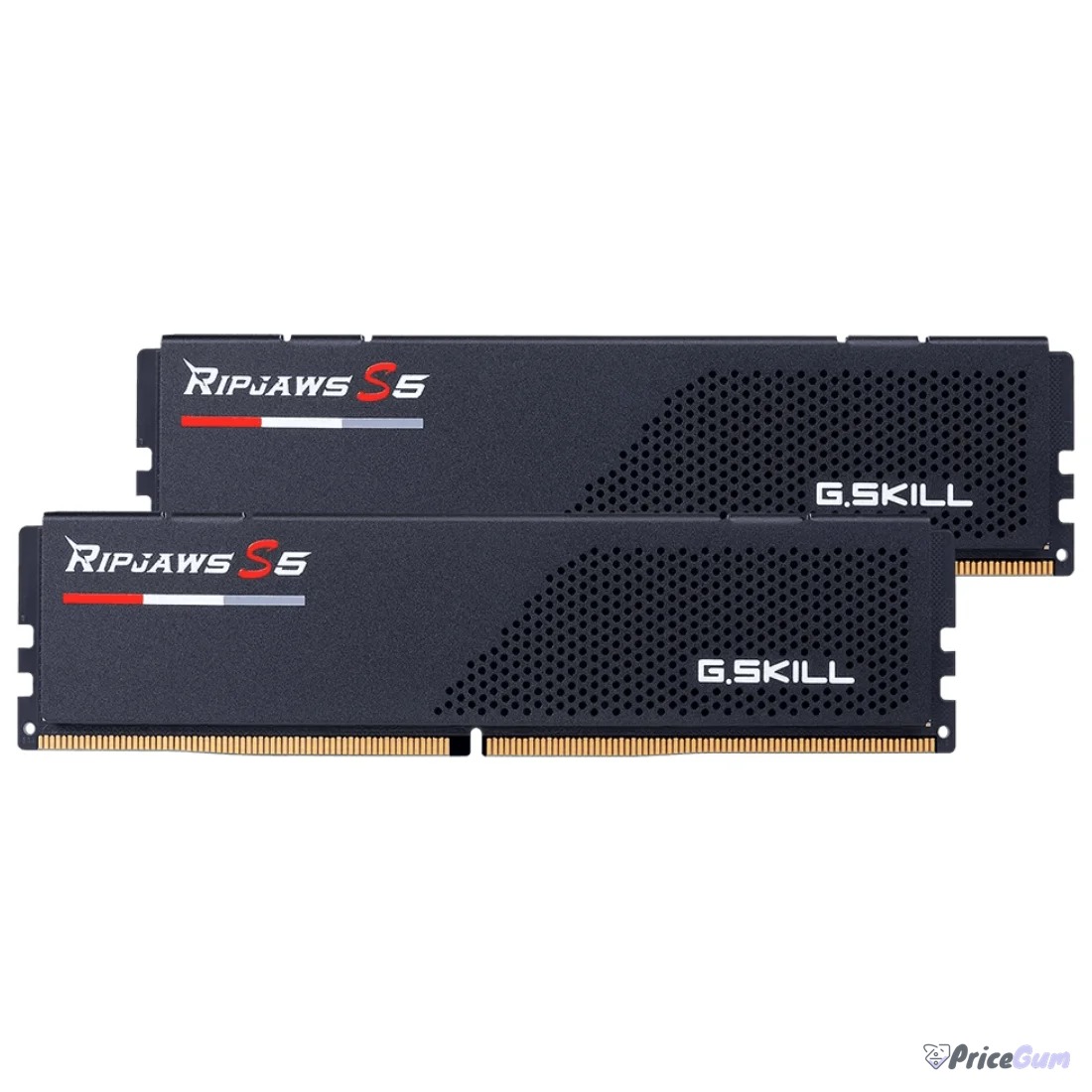
Global figures in this post come from SK Hynix third quarter 2026 results reported on October 28, 2026 by Morningstar, TweakTown and the Motley Fool; TrendForce fourth quarter 2026 forecasts published September 30, 2026 as reported by Guru3D; Samsung preliminary third quarter guidance of October 8, 2026; and Counterpoint third quarter 2026 PC shipment figures. Pakistan figures come from Dawn, October 26, 2026; the RB Tech and Games Samsung 990 PRO 1TB listing, price updated October 26, 2026; and the Qeemat Samsung 990 PRO aggregator snapshot of October 28, 2026, used only as a market snapshot. Contract forecasts are labelled as forecasts throughout, and retailer prices are dated listings, not official brand prices. No Pakistan import duty or policy change specific to memory was found for October 2026, and none is claimed here. Images: Samsung 990 PRO 1TB product photo and G.Skill Ripjaws S5 DDR5 kit photo via RB Tech and Games, watermarked.
- Buying the capacity you actually need now locks in a price before the next contract rise reaches shop shelves.
- Good SSDs and RAM kits are still in stock at Lahore and online sellers, so buyers can still compare two or three shops.
- A single SSD upgrade can make an old laptop or PC feel fast again, without buying a whole new machine.
- Keeping a DDR4 machine going for one more upgrade cycle can be cheaper than jumping to a costly DDR5 build.
- Smaller, well chosen upgrades (one 1TB SSD, or 16GB of RAM) cost far less than a full new build.
- RAM and SSD prices are still rising, so the same kit may cost more in a few weeks than it does today.
- High capacity kits (32GB and above) have risen the most, so big upgrades now carry the biggest premium.
- Shop prices move fast during a shortage, so a price seen in the morning may not hold till the evening.
- Cheap, low capacity options are shrinking, as makers shift stock toward higher margin server memory.
- Waiting for a price fall has no clear date, with the biggest maker guiding that supply stays tight through 2030.
FAQs
Are RAM and SSD prices in Pakistan rising right now?
Yes. Global contract prices are forecast to rise again in the fourth quarter of 2026, and Pakistan listings already show it: a Samsung 990 PRO 1TB SSD in Lahore rose from Rs 48,999 to Rs 69,999 on October 26, and Dawn reported Karachi phone prices up Rs 15,000 to Rs 30,000 per handset.
Why are RAM and SSD prices rising?
AI data centres are buying huge amounts of memory, and the three big makers (Samsung, SK Hynix and Micron) are giving priority to server memory, which earns more. Consumer RAM and SSDs get less factory capacity, so prices rise even though consumer demand is weak.
How much did the Samsung 990 PRO 1TB rise in Lahore?
RB Tech and Games in Lahore raised it from Rs 48,999 to Rs 69,999 on October 26, 2026, a rise of 43 percent. The drive is listed as in stock at the new price. An aggregator snapshot on October 28 showed 990 PRO listings starting from Rs 62,499 across stores and variants.
Will RAM and SSD prices fall soon?
No current forecast says so for the fourth quarter of 2026. TrendForce forecasts further contract rises, and SK Hynix says demand will exceed supply through 2030. The first possible relief window named for SSDs is the second half of 2027, and that is a forecast, not a promise.
Should I buy DDR4 RAM to save money?
Not reliably. DDR4 output is being cut as makers shift to DDR5 and server memory, and reported DDR4 contract prices climbed about 24 percent over three months. A DDR4 upgrade can still make sense to keep a good older PC going, but do not count on DDR4 staying cheap.


Add comment