
 Muhammad Naeem
CPU and GPU prices in Pakistan are climbing again, and October brought a fresh round of rises from the companies that make the chips inside every PC. Intel and Qualcomm have reportedly raised processor prices, AMD is reportedly preparing a similar move, and AMD has already raised the price of the memory it supplies with its graphics cards. For buyers in Pakistan, where every component is imported, that points to dearer PC builds and upgrades in the weeks ahead, not a price drop to wait for.
This post pulls together what actually changed in October, what graphics cards cost in Pakistan right now, and what it means for a builder who needs a CPU or a GPU. One warning up front: almost every figure below is a reported supplier level rise, not an official company price list. None of Intel, Qualcomm, AMD or TSMC has publicly confirmed these moves. Treat the percentages as the direction of travel, not as a promise that your exact part rises by that much.
CPU prices: Intel, Qualcomm up, AMD reportedly next
The story broke in Taiwan’s Commercial Times and was relayed by VideoCardz on October 12 and ProPakistani on October 13. Intel had been expected to raise CPU prices by up to 10 percent in October, but supply chain reports say some rises already took effect on September 1. The pattern is tiered, not flat, so different chips rise by different amounts.
| Maker and family | Reported rise | Reported timing |
| Intel Panther Lake, higher end graphics versions | 15 to 20 percent | September 1, 2026 |
| Intel Meteor Lake and Arrow Lake | 5 to 10 percent | September 1, 2026 |
| Intel Alder Lake and Twin Lake, entry and low power | 10 to 20 percent | September 1, 2026 |
| Qualcomm Snapdragon X and X2 Elite | About 10 percent | October 1, 2026 |
| AMD selected Ryzen and EPYC families | About 10 percent, unconfirmed | Date not confirmed |
Intel’s move is reported to be its third price rise since late 2025, which tells you this is a trend, not a one off. The largest rises hit Panther Lake laptop chips with the stronger integrated graphics, which matters for thin laptops that rely on that graphics tile. Older families rose too, including 12th generation Alder Lake and low power Twin Lake chips, so even budget laptop and mini PC buyers are not spared.
Qualcomm’s rise is cleaner to date: about 10 percent on Snapdragon X and Snapdragon X2 Elite PC platforms from October 1. AMD is the open question. Reports say AMD is preparing about 10 percent on some Ryzen and EPYC families, but the size, the exact families and the date are all unconfirmed. Until AMD or its partners say so plainly, treat the AMD figure as expected, not done.
The common cause is factory cost. TSMC, which makes chips for all three companies, is reportedly planning further price rises for 2027, including 5 to 10 percent for advanced process nodes and 10 to 15 percent for advanced packaging. Add strong AI demand for server chips, and consumer processors sit at the back of the queue for factory capacity. That is the same squeeze already pushing memory prices up, now reaching the processor itself.
GPU prices: AMD closes the last cheap lane
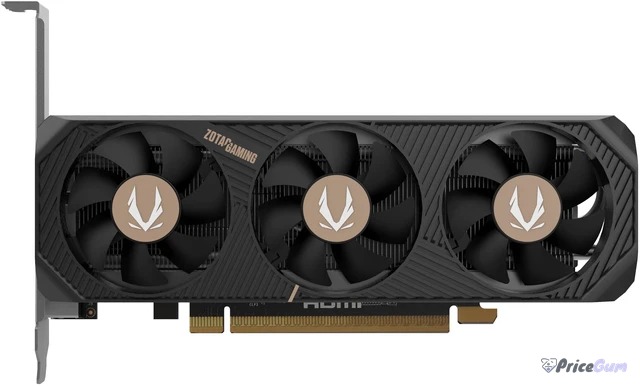
Graphics cards have their own October story, and it is just as unwelcome. AMD, whose Radeon RX 9000 series had been the one major lineup still selling near sane prices, told its board partners that the GDDR6 memory it supplies with its GPU chips would cost more from October 1. The report, sourced to the Chinese supply chain forum Board Channels and corroborated by BenchLife, was covered by TechTimes on October 12. AMD has not issued a public statement on the October hike, and the exact percentage has not been independently confirmed.
It is AMD’s fourth memory related price adjustment in ten months. A first rise came in December 2025, a partner notice dated July 31, 2026 confirmed at least 10 percent for August delivery, and channel tracking in China pushed the RX 9070 XT from about 5,599 yuan to about 6,999 yuan during the third quarter, roughly 20 percent. The October GDDR6 hike lands at the partner level, before cards reach shops, so it shows up on shelves only as old stock clears.
The global numbers behind that are stark. SmartValueLab’s October 2026 tech price index, built from daily Amazon prices for more than 600 products, found current generation cards (RTX 50 and RX 9000) cost a median 33 percent more on October 13 than about 90 days earlier. In Germany, the best tracked market in Europe, 3D Center data put RTX 50 series prices up 66 percent on average over 12 months, with the RTX 5090 flagship up 132 percent, while Radeon RX 9000 cards rose 48 percent. US system integrator Stince Built warned publicly on October 9 that GPU supply constraints were increasing across its distributors and that significantly higher prices looked likely to persist.
What this means in plain terms: the budget lane is closing. For most of the year, a buyer who could not afford Nvidia’s prices could turn to AMD. With AMD’s memory costs rising too, that escape route narrows, and entry level and mid range cards face the same upward pressure as flagship cards.
What this costs in Pakistan right now
Pakistan feels chip price rises twice over: once in dollars at the factory, and again in rupees at the port and the shop. A current snapshot of the most popular mid range card shows where local prices stand today.
| Pakistan snapshot (seen October 30) | Figure |
| ZOTAC RTX 5060 lowest listing, Qeemat aggregator | From Rs 129,999 at JunaidTech |
| ZOTAC RTX 5060 offers across Pakistan stores | 14 offers from 8 stores, Rs 129,999 to Rs 159,999 |
| ASUS Dual RTX 5060 listing, Zestro Gaming price page | Rs 155,000 |
| RTX 5060 8GB starting price, early 2026 snapshot | About Rs 112,000 (Zestro Gaming, early 2026) |
Read that table with care. The Qeemat figure is a live aggregator snapshot from October 29, spanning different stores and card versions, so it shows the market range rather than one shop’s price. The early 2026 figure of about Rs 112,000 comes from a different page and a different point in the year, so it is not a like for like measure of the rise on one card. It does, however, show the direction: the cheapest way into a current generation mid range card now sits well above where the same class of card started the year.
Local evidence that chip costs are already reaching Pakistani shoppers came from Karachi on October 26. Dawn reported mobile phone prices up Rs 15,000 to Rs 30,000 per handset, with a basic 4GB RAM and 64GB storage phone moving from about Rs 20,000 to Rs 22,000 a year ago to Rs 35,000 to Rs 40,000 now. The Karachi Electronics Dealers Association president told Dawn there has been no major tax rise behind the jump, and that rising chip costs are the main cause. Phones are not PC parts, but they share the same chips, the same factories and the same import chain, so the pass through is a fair warning for PC builders. A Hafeez Center, Lahore market update posted about six days ago also walks through current GPU and DDR4 and DDR5 RAM prices shop by shop, which is worth watching before you buy, though no hard figures are taken from that video here.
What should a PC builder in Pakistan do?
Start with the part you actually need. If your CPU or GPU is holding back work or games today, waiting has no clear payoff: every October source points up, and more factory rises are already reported for 2027. Buy the capacity you need, not the flagship you want, because the top end has risen the most. A mid range card such as the RTX 5060 still handles modern games well at 1080p and 1440p, and a mid range processor paired with a good board is a better use of money than a flagship chip on a weak board.
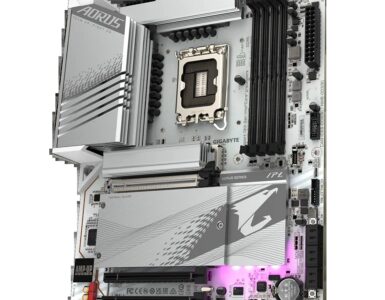
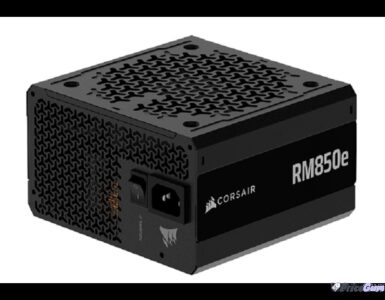
Plan the whole build, not just the headline part. A processor rise also affects the board and cooler you pair with it, and a graphics card rise affects the power supply you need. Our Gigabyte B760M DS3H and ASUS TUF Gaming B650 Plus WiFi pages cover solid mid range boards for Intel and AMD builds, the MSI B650 Tomahawk WiFi is a strong step up for Ryzen builders, and the Corsair CV550 550W PSU and Cooler Master Hyper 212 Black Edition cover power and cooling without flagship prices. Case airflow matters more as parts run hotter: the NZXT H5 Flow is a proven budget airflow case. For a full budget plan, see our gaming PC under Rs 175,000 in Pakistan guide.
Then shop like a local. Compare two or three sellers, in Hafeez Center Lahore, Naz Plaza Karachi or online, and confirm the exact model, warranty and whether the price is for new sealed stock, since open box and pulled parts circulate widely. Confirm the price on the day you pay, because a quote from the morning may not hold till the evening in a fast market. And keep the box and bill: warranty claims on imported parts live or die on paperwork.
For laptop buyers, the same logic applies with one extra twist. Laptop prices lag chip rises by a quarter or more, because makers sell through stock ordered earlier. A laptop bought today may still carry pre rise pricing, while the same model restocked next quarter may not. If you need a laptop soon, that lag is a reason to buy sooner rather than later.
Where this news comes from
CPU figures in this post come from Taiwan’s Commercial Times supply chain reporting, relayed by VideoCardz, October 12, 2026, ProPakistani, October 13, 2026 and WCCFTech, October 12, 2026. GPU figures come from TechTimes, October 12, 2026 and SmartValueLab Tech Price Index, October 2026. Pakistan figures come from the Qeemat ZOTAC RTX 5060 aggregator snapshot, October 29, 2026, the Zestro Gaming graphics card price page, and ProPakistani, October 26, 2026 reporting Dawn’s Karachi handset price coverage. All CPU and GPU supplier rises are reported, not officially confirmed, and are labelled as such throughout. Aggregator figures span stores and card versions and are snapshots, not single shop prices. Images: ZOTAC RTX 5060 product photos via ZOTAC and Newegg, watermarked.
- Buying the CPU and GPU you actually need now locks in a price before the next supplier rise reaches shop shelves.
- Older generation parts and last generation cards can still offer good value while shops clear stock bought earlier.
- A mid range card such as the RTX 5060 still plays modern games well at 1080p and 1440p without flagship money.
- Comparing two or three sellers in Hafeez Center or online can still save thousands of rupees on the same card.
- Planning the full build, board, cooler and power supply together avoids a costly mismatch later.
- CPU and GPU prices are still rising, so the same part may cost more in a few weeks than it does today.
- Supplier level rises do not hit every model equally, so headline percentages do not tell you your exact price.
- High end cards have risen the most, so big upgrades now carry the biggest premium.
- Shop prices move fast during a shortage, so a price seen in the morning may not hold till the evening.
- Waiting for a price fall has no clear date, with more factory price rises already reported for 2027.
FAQs
Are CPU prices rising in Pakistan?
Supplier prices are reportedly rising, which reaches Pakistan through imports. Intel reportedly raised Panther Lake chips 15 to 20 percent from September 1, Qualcomm raised Snapdragon X platforms about 10 percent from October 1, and AMD is reportedly preparing about 10 percent on some Ryzen and EPYC chips, with the date unconfirmed.
Why are GPU prices rising again?
Memory costs are feeding into graphics cards. AMD raised the GDDR6 memory price it charges its board partners from October 1, its fourth memory related adjustment in ten months, and global tracking put current generation cards a median 33 percent dearer on October 13 than about 90 days earlier.
What does an RTX 5060 cost in Pakistan now?
Qeemat’s October 29 snapshot lists the ZOTAC RTX 5060 from Rs 129,999 at JunaidTech, with 14 offers from 8 stores ranging from Rs 129,999 to Rs 159,999. Prices vary by store and card version, so confirm the exact model before paying.
Should I buy a CPU or GPU now or wait?
If you need the part now, buying now is the safer move: every October source points up, and more factory rises are reported for 2027. If the upgrade is optional, you can wait, but no current source gives a date for a price fall.
Are these CPU price rises officially confirmed?
No. They come from Taiwan supply chain reporting relayed by VideoCardz, WCCFTech and ProPakistani. None of Intel, Qualcomm, AMD or TSMC has publicly confirmed the moves, and the AMD size and date remain unconfirmed. This post labels them as reported throughout.


Add comment