
 Muhammad Naeem
Solar power saved Pakistan between $4.5 billion and $5.5 billion in net energy imports in the financial year 2025-26. The figure comes from staff estimates at the State Bank of Pakistan, first reported on 23 November 2026. It is the clearest sign yet that the solar boom on Pakistani rooftops is now large enough to move the national import bill.
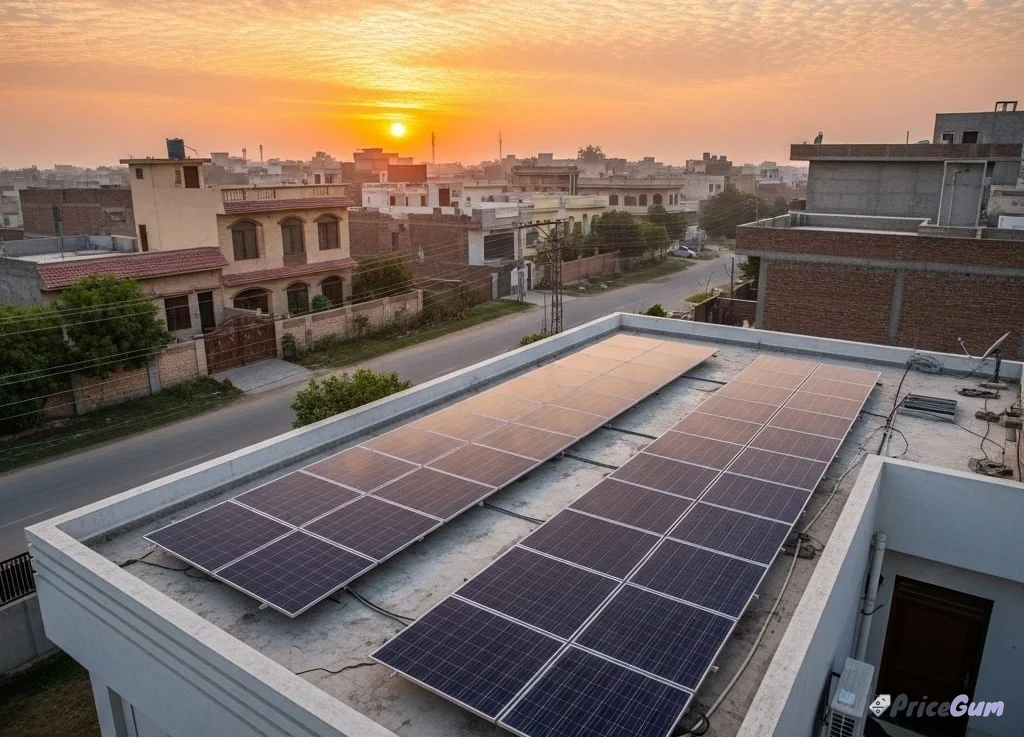
To put it in plain terms, the panels on rooftops and in solar farms across the country did work that would otherwise have needed imported gas, coal and furnace oil. Every unit of power made by the sun was a unit Pakistan did not have to buy as fuel from abroad. This article explains where the number comes from, what it covers, and what it does not cover.
A staff estimate, not an official figure
The most important thing to know first is that this is a staff estimate. It is not an official line in the State Bank’s balance of payments data. Staff at the central bank built the estimate from Pakistan Bureau of Statistics import data, NEPRA reports, China solar PV export data and reporting by Ember. The figure will be refined as final data for the financial year lands. So the $5.5 billion figure is the top end of a range, and it should be read as an informed estimate, not as a final official number. According to TechJuice, which first reported the estimate on 23 November 2026, the same figures were also carried by Good News Pakistan, which confirms the numbers from a second outlet.
The headline numbers
The estimate has two layers. The gross saving, before the cost of the solar equipment itself, sits between $5.9 billion and $6.9 billion. That is the value of the fuel Pakistan did not have to import because solar panels made the power instead. Then the equipment bill is taken off. Pakistan spent about $1.4 billion in the same year on solar panels, inverters and batteries. Subtract that, and the net saving lands between $4.5 billion and $5.5 billion.
| Figure | Value | Source |
| Gross import saving from solar | $5.9 to $6.9 billion | State Bank staff estimates |
| Solar equipment import bill | About $1.4 billion | Pakistan Bureau of Statistics |
| Net import saving | $4.5 to $5.5 billion | State Bank staff estimates |
| Installed solar capacity | 51 GW (March 2026) | Pakistan Electricity Review Report 2026 |
| Average operational capacity in FY26 | 44.5 GW | Pakistan Electricity Review Report 2026 |
| Solar generation in FY26 | 66 to 78 TWh | Pakistan Electricity Review Report 2026 |
How the saving was worked out
The method is simple in outline. First, work out how much power solar panels made in the year. The Pakistan Electricity Review Report 2026 puts solar generation in FY26 at 66 to 78 terawatt hours, from an average operational capacity of 44.5 GW running at a 17 to 20 percent capacity factor. That is the power solar supplied.
Second, work out what that power would have cost if it had come from imported fuel instead. The estimate uses a weighted average displaced fuel cost of PKR 24.9 per unit. The mix behind that number is RLNG at about PKR 34 per unit, coal at about PKR 16 per unit, and furnace oil at about PKR 58 per unit. Multiply the solar generation by that fuel cost, convert at PKR 281 to the dollar, and you get the gross saving. Then subtract the equipment import bill to reach the net figure.
The equipment bill itself breaks down into three parts, all from Pakistan Bureau of Statistics HS 8-digit data as reported by TechJuice. Solar panels cost $819 million, inverters cost $344 million, and batteries cost $254 million. Together that is about $1.4 billion, which is the amount netted off the gross saving.
Capacity: why three different numbers?
Readers who follow solar news in Pakistan may have seen very different capacity numbers, and they can look like they disagree. They do not. They measure different things.
Installed solar capacity rose from 38 GW in FY2025 to 51 GW by March 2026, according to the Pakistan Electricity Review Report 2026. That is the total of panels fitted and working, on rooftops and in solar farms. A second number comes from trade data. Cumulative panel imports reached about 58 GW by the end of FY26, according to Asia Daily, citing the World Nuclear Industry Status Report 2026. That is higher than installed capacity, and the reason is simple. Imports are not the same as installed panels. Some imported panels sit in warehouses. Some are fitted off grid, where they never touch the national grid. Some are used for self consumption by homes and factories that never export power. A third number is much smaller. Officially net metered capacity is only about 6,485 MW, according to Business Recorder BR Research. Net metering covers only homes and businesses that have a formal two way connection with their power company, so that they can sell extra units back to the grid. Most solar users in Pakistan are not net metered. They use the power themselves. So the three numbers describe three different groups, and none of them is wrong.
What the saving means for Pakistan
Pakistan spends a large share of its foreign exchange on energy imports every year, so a saving of $4.5 to $5.5 billion matters. It eases pressure on the rupee and on the current account, and it gives the government more room in a year when fuel prices are hard to predict. It also shows that the solar shift is no longer a small rooftop trend. At 51 GW installed, solar is a major part of how the country makes power.
There are limits to what the number means, and they are worth stating plainly. The saving is avoided fuel cost, not cash in hand. Households and businesses still paid for the panels, inverters and batteries, and much of that money left the country as equipment imports. The $1.4 billion equipment bill is already taken off in the net figure, but the cost of fitting the systems, and the loans many buyers took to pay for them, sit outside this estimate. The saving also depends on the fuel mix it replaces. If gas and oil prices fall, the value of the displaced fuel falls with them.
For buyers, the trend is still friendly. Solar panel prices dropped in November 2026, which keeps the payback time on a home system short. Anyone planning a system should still check the full cost first, including the inverter and fitting. Our guide to the on-grid solar system price in Pakistan covers typical system sizes and what they cost, and our roundup of the best 5kW solar inverter in Pakistan helps with the second biggest cost after the panels.
The export rate side note
One detail that matters to solar owners is what they get paid for the extra units they send back to the grid. NEPRA SRO 1501(I)/2026 values exports at Rs 8.13 per unit for April to June 2026, according to PowerPost, which updated its report on 18 November 2026. News reports also quote figures of about Rs 10 to Rs 11 per unit. Under the old net metering rules, the rate was about Rs 25.32 per unit. The gap between the old rate and the new one is one reason many new buyers now size their systems to use most of the power themselves, instead of counting on export income.
What to watch next
The estimate will be refined as final FY26 data lands, so the range may narrow or move. Two things will shape the next set of numbers. The first is the net metering policy and the export rate, which decide how fast new systems are fitted. The second is panel prices, which have been falling and could fall further if global supply stays strong. If both stay friendly, the saving in the current financial year could be larger still. But the honest reading is the one the State Bank staff gave. This is an estimate built from the best data available today, and it points in one clear direction. Solar is now saving Pakistan billions of dollars a year in fuel it no longer has to import.
- Net saving of $4.5 to $5.5 billion in FY26 is a large relief for the import bill
- Installed capacity grew fast, from 38 GW to 51 GW in about a year
- Solar cuts reliance on imported gas, coal and furnace oil at the same time
- Falling panel prices keep home systems affordable for new buyers
- The figure is a staff estimate, not an official balance of payments line
- Equipment imports of about $1.4 billion are a real cost that must be paid every year
- The new export rate of Rs 8.13 per unit is far below the old Rs 25.32 net metering rate
- Most solar capacity is not net metered, so grid data understates the true scale
Frequently asked questions
How much did solar save Pakistan in FY26?
Between $4.5 billion and $5.5 billion in net energy imports, according to State Bank of Pakistan staff estimates first reported on 23 November 2026. The gross saving was $5.9 to $6.9 billion, minus about $1.4 billion spent on solar equipment imports.
Is this an official State Bank figure?
No. It is a staff estimate, not an official balance of payments line. It was built from Pakistan Bureau of Statistics import data, NEPRA reports, China solar PV export data and Ember reporting, and it will be refined as final FY26 data lands.
Why is installed capacity 51 GW but net metered capacity only about 6,485 MW?
They measure different things. Installed capacity counts all fitted panels. Net metered capacity counts only systems with a formal two way grid connection. Most solar users in Pakistan use the power themselves and are not net metered, and some imported panels are off grid or still in warehouses.
What did Pakistan spend on solar equipment imports in FY26?
About $1.4 billion. Panels cost $819 million, inverters cost $344 million, and batteries cost $254 million, according to Pakistan Bureau of Statistics HS 8-digit data as reported by TechJuice.
What is the current solar export rate?
NEPRA SRO 1501(I)/2026 values exports at Rs 8.13 per unit for April to June 2026. News reports quote about Rs 10 to Rs 11 per unit, while the old net metering rate was about Rs 25.32 per unit.
Sources: TechJuice, 23 November 2026, citing State Bank of Pakistan staff estimates; Good News Pakistan; Pakistan Electricity Review Report 2026; Pakistan Bureau of Statistics; Business Recorder BR Research; Asia Daily, citing the World Nuclear Industry Status Report 2026; PowerPost, updated 18 November 2026.


Add comment